Vlaggenmasten
Vrijstaande masten in aluminium of staal, met of zonder hijssysteem, inclusief de fundering. Voor bedrijven, gemeentehuizen, scholen en sportsites.
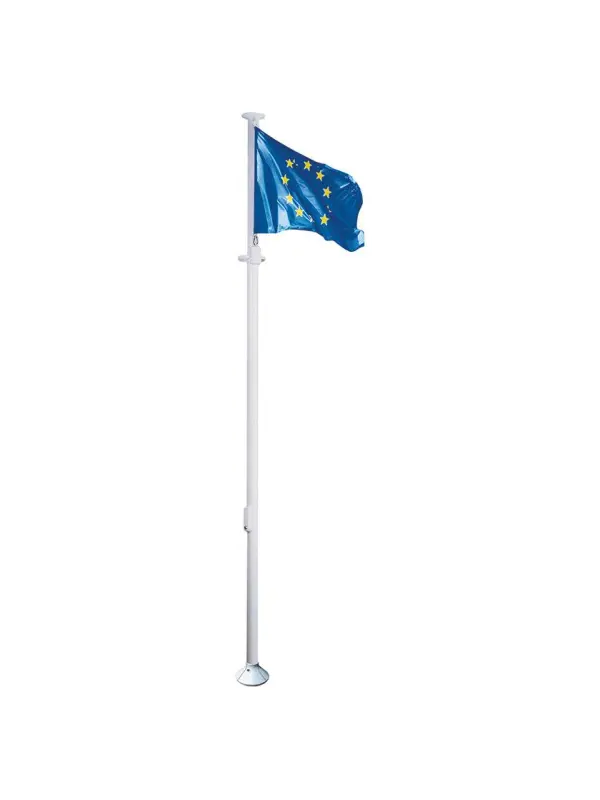
The pole determines how high your flag goes, how it behaves in wind, and how easily you change it. A pole too light for the flag it carries will bend or break — that is the mistake made most often.
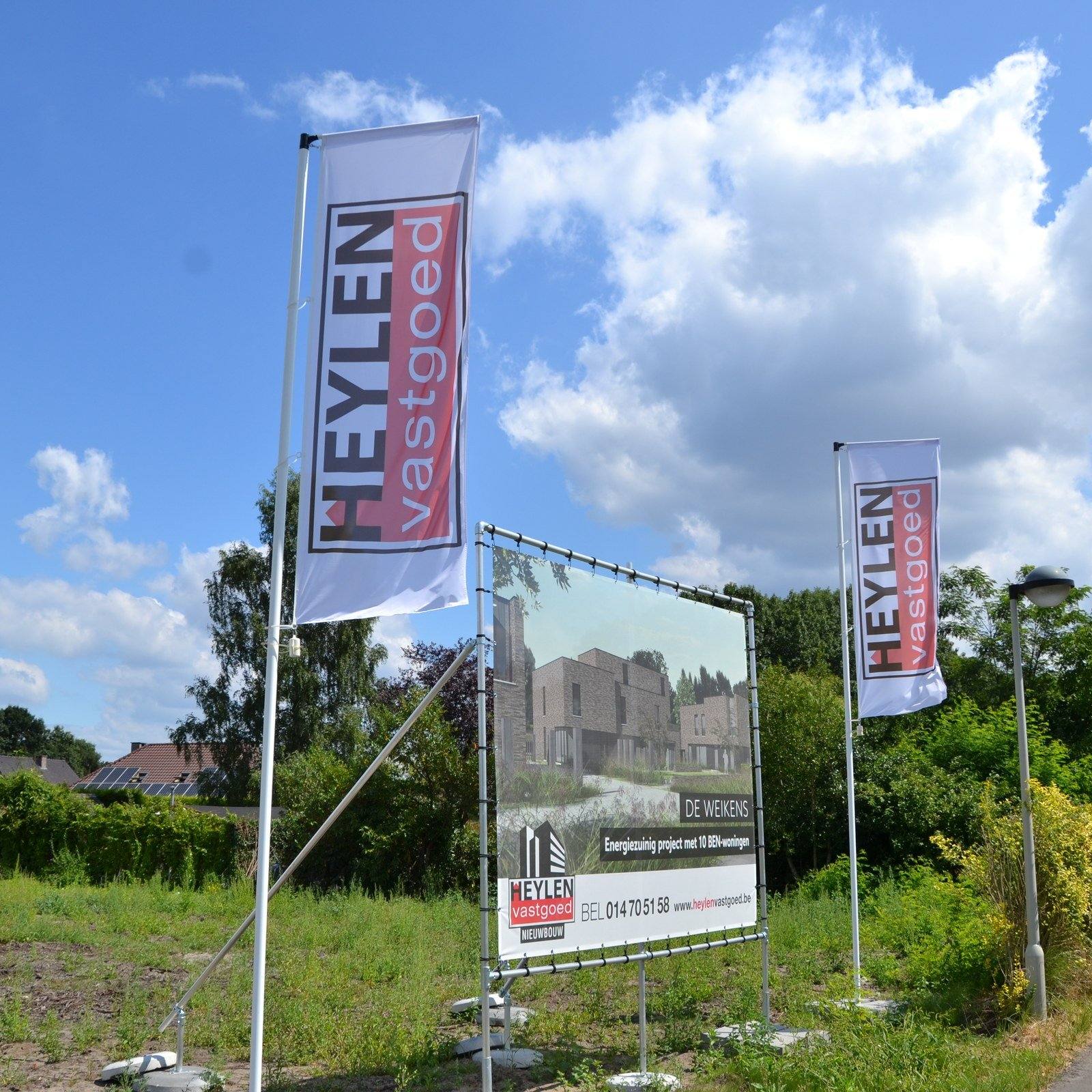
Vrijstaande masten in aluminium of staal, met of zonder hijssysteem, inclusief de fundering. Voor bedrijven, gemeentehuizen, scholen en sportsites.
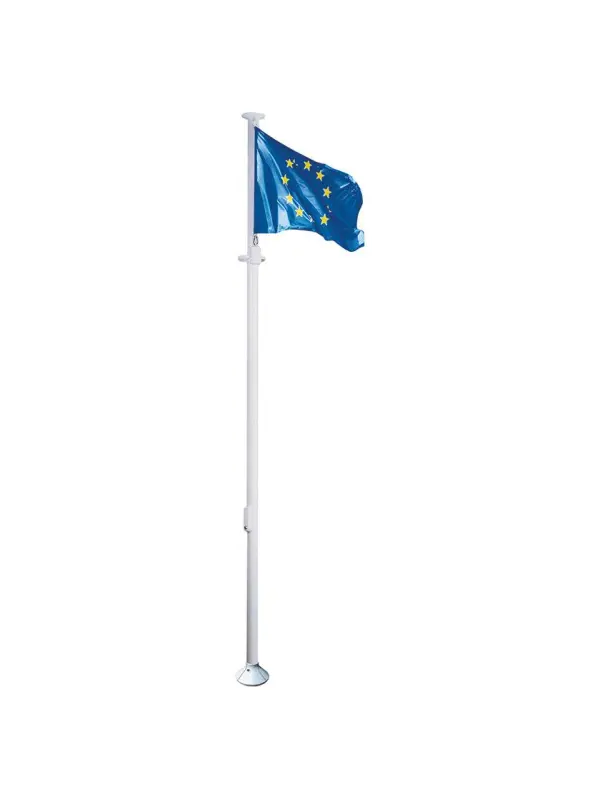
Height-adjustable telescopic flagpoles. Quick to set up and compact to store after the event.
From first sketch to maintenance — one partner who handles everything in-house.
You call one number. We measure, design, produce, install and maintain. No fragmented responsibility, no waiting on subcontractors pointing at each other.
A 3D visualisation of your own façade or space, by day and by night. We only start producing once that image is right. No surprises afterwards.
Custom work from our own workshops, without intermediaries. That means a shorter lead time, a sharper price, and changes that are genuinely still possible.
ISO 9001 and ISO 14001. Colourfast, weather-resistant materials and energy-efficient LED lighting. With long-term service and maintenance.
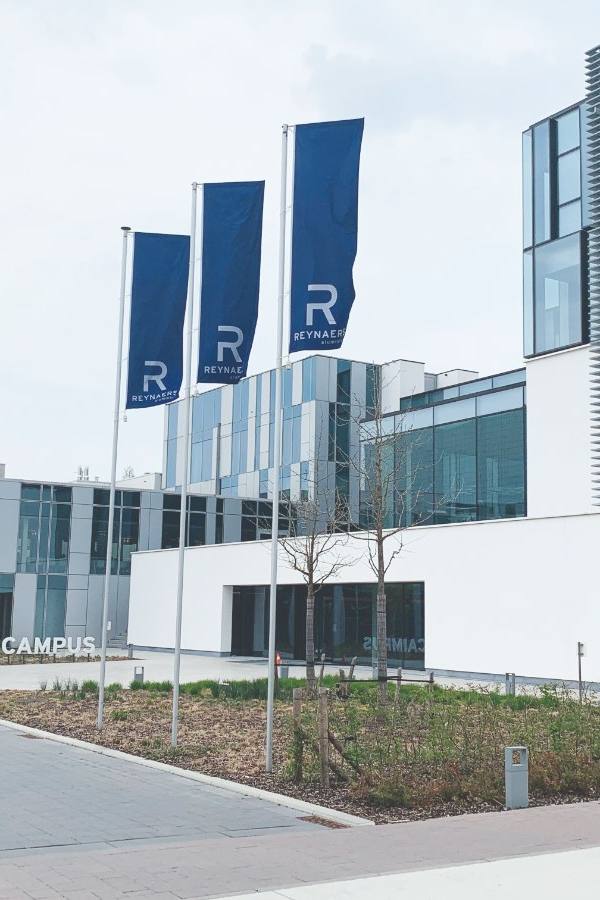
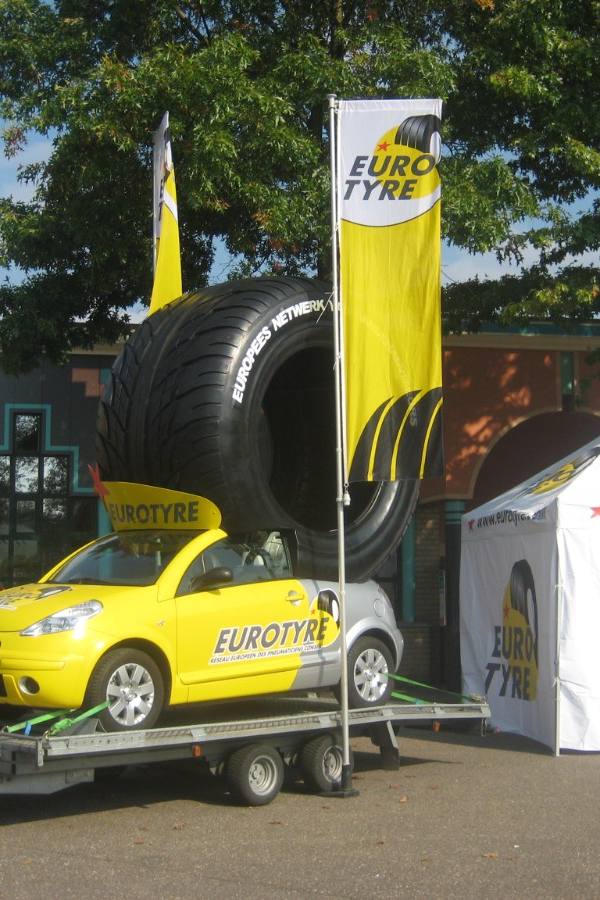
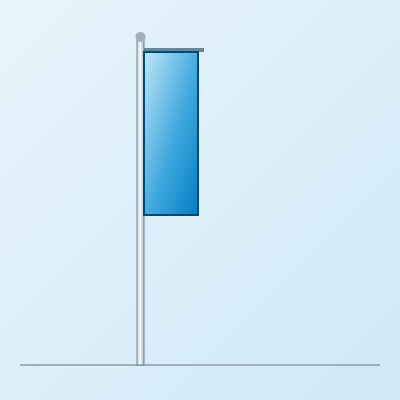
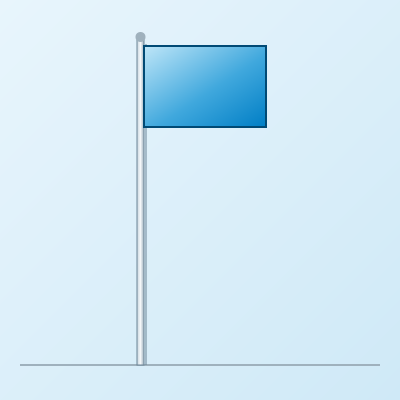
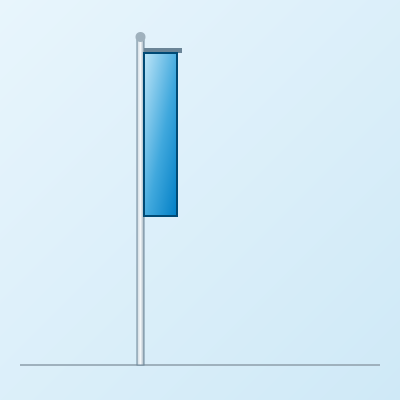
The difference is in the fabric. A flagpole carries a loose flag that flies freely; a banner pole holds the fabric tensioned between an upper and a lower arm, so it stays readable even on a still day. For company branding along a driveway or a car park the banner pole therefore wins almost every time: your logo is visible seven days a week instead of only when there is wind.
Search for pole banner, banner arm, mast flag or wall-mounted pole and you land in this family.
A tension spring in the lower arm keeps the fabric taut and absorbs gusts at the same time. Without that spring the wind pulls on the fixing points and the fabric tears there first. A banner pole with a tension spring is not a luxury version but the reason a banner lasts a season longer.
Where there is no ground available, a shop unit on a street, a façade on a square, the pole goes on the wall. A wall-mounted pole carries a smaller fabric but does put your name at street eye level. The fixing needs attention: the anchor point has to sit in load-bearing masonry, not in insulation or in cladding.
With a telescopic pole the upper section slides down, or the pole tilts in its base. That means you can change a fabric without a ladder and without a cherry picker. For anyone swapping banners by season or by campaign, that pays for itself quickly, not in the purchase but in what every changeover afterwards costs in time and equipment.
Poles are usually anodised aluminium: light, low-maintenance and corrosion resistant. Stainless steel is chosen where the look has to be sharper or the environment is more aggressive. Powder-coated steel appears where the pole has to match a specific colour on the rest of the building.
There are three ways to fix a pole. In open ground you get a concrete foundation with a ground socket, into which the pole is dropped and levelled afterwards. On existing hard standing a base plate with chemical anchors does the job. On a building it is a wall bracket. Which of the three applies depends on the substrate, the height of the pole and the size of the fabric.
With poles the difference is rarely in the pole itself. Height counts, and so does the number, but the biggest variables sit around it: does excavation and a foundation have to happen, is the site reachable by lorry and crane, are there utility lines in the way, and is installation included or do you collect yourself. A pole on an open business park and the same pole in a narrow shopping street are two different projects.
The fabrics count too. Install a row of poles and change the banners by season and you are really buying a system, not a product, and the question becomes how many changeovers you plan per year.
Prices are available in the Herva-Doublet Platform.
We look at the site, advise on height and fabric size in proportion to the building, take care of the foundation and the installation, and print the fabrics ourselves. Send us a drawing or a photograph of the location with the position you want, and a proposal will come out of that which takes into account what is possible on site.
What you see here is a selection. Our range is considerably wider — in sizes, materials and finishes that we cannot all show online. Tell us what you need it for and where it has to go, and we will work out what fits.
Ask your questionRequest access to our Herva-Doublet Platform. We review your request personally.