Baniermasten
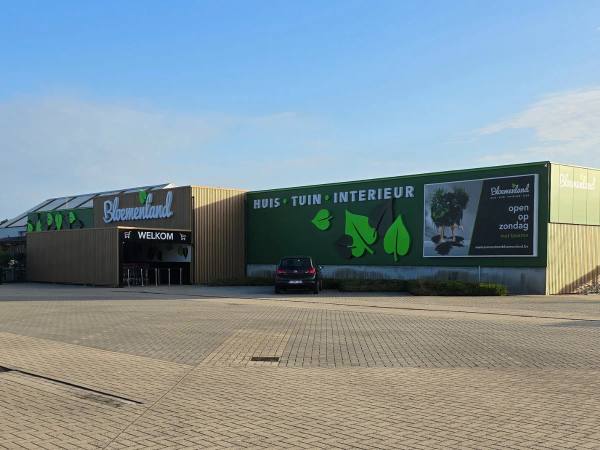
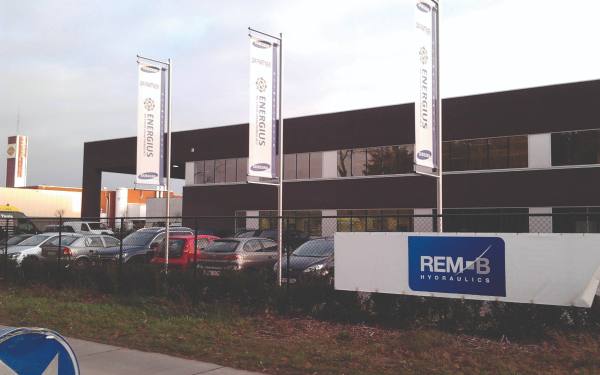
Masten met een uitkragende arm waaraan een banier verticaal hangt, strak gespannen tussen boven- en onderarm. Voor invalswegen, winkelstraten en bedrijvenparken die er een paar keer per jaar anders uit mogen zien.
Masts and façade systems that hold a banner vertically under tension. For approach roads, shopping streets and business parks, with a banner you swap out for each campaign.
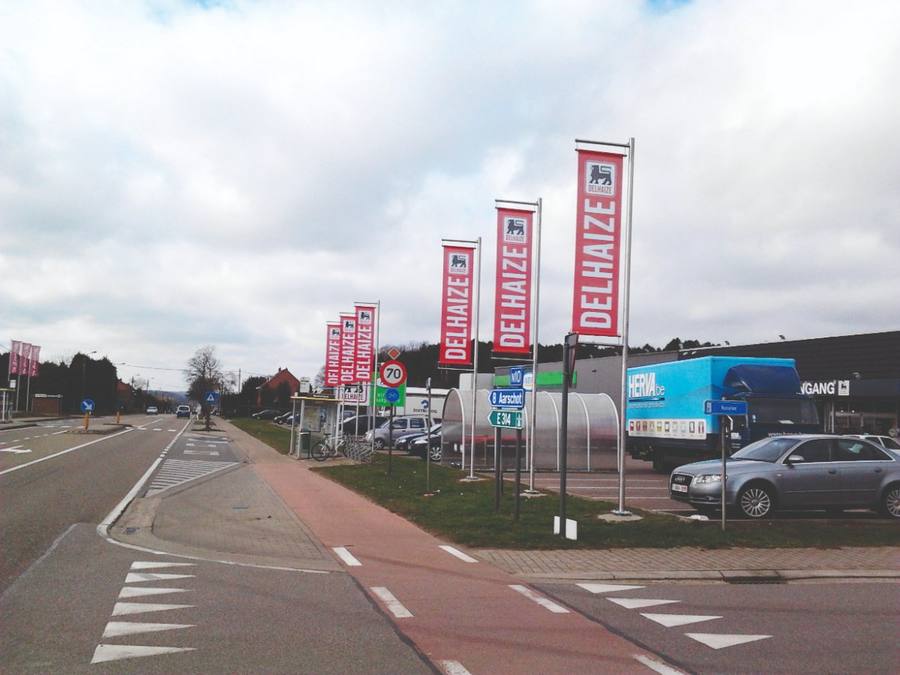
Masten met een uitkragende arm waaraan een banier verticaal hangt, strak gespannen tussen boven- en onderarm. Voor invalswegen, winkelstraten en bedrijvenparken die er een paar keer per jaar anders uit mogen zien.
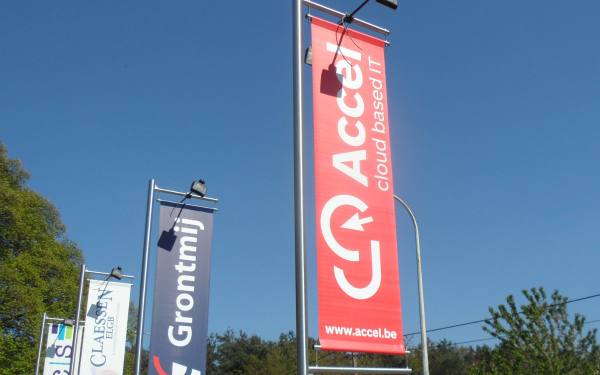
Vertical banner on the façade that makes a brand or message visible from the street. Interchangeable for a new campaign.
From first sketch to maintenance — one partner who coordinates the whole project.
You call one number. We measure, design, have it produced, install and maintain. No fragmented responsibility, no waiting on subcontractors pointing at each other.
A 3D visualisation of your own façade or space, by day and by night. Production only starts once that image is right. No surprises afterwards.
From façade to interior: 20 product families with one partner. No need to coordinate three suppliers.
ISO 9001 and ISO 14001. Colourfast, weather-resistant materials and energy-efficient LED lighting. With long-term service and maintenance.
A façade banner is a vertical banner hanging at right angles to or flat against the façade, making your brand, name or campaign visible from the street. It is one of the simplest forms of façade advertising, and at the same time one of the most effective: the vertical shape stands out among the horizontal lines of a streetscape, right in the line of sight of anyone passing.
Façade banners suit shops and hospitality, businesses marking their head office, museums, arts venues and libraries with changing exhibitions, schools and care institutions, and local authorities bringing a campaign into the streetscape. We handle design, printing, hardware and installation.
The classic version is a banner held in a top and bottom profile on a projecting bracket, so it sits at right angles to the façade and is legible from both sides. There is also the flat version, where the banner hangs tensioned against the face of the building, in a frame or with tension straps on eye bolts.
If you change the graphic regularly, a clamping profile or a spring tension system is worth it. That lets you replace the banner in minutes while the hardware stays in place. Double-sided printing is standard for projecting banners; for a flat banner single-sided is enough.
Think about visibility after dark too. A banner above an existing façade spotlight or with its own luminaire keeps working in the evening; without light it disappears.
The fabrics are usually PVC-free or PVC-coated textile, or a woven mesh with small perforations. That mesh lets wind through and greatly reduces the load on the façade and the hardware. For wide banners on an exposed façade that is often the sensible choice, even if it costs some image sharpness.
We print with UV-resistant inks and finish with welded hems and reinforced corners. Brackets and profiles are in galvanised or coated steel, or in aluminium. Indoor set-ups often carry fire performance requirements; we then supply fabric in the appropriate class according to what the tender specification prescribes.
Do not underestimate the wind. A banner catches far more force than people expect, and the fixing belongs in load-bearing masonry or concrete, not in insulation or cladding. Where there is any doubt we have the anchoring checked. If the banner hangs over public land, local rules on projection and clear height apply, and a permit is usually required.
The artwork is best kept short and built up vertically: a large logo or word at the top, minimal text. Enlarging an A4 poster to banner size is the most common mistake; typography that works on paper falls apart at ten metres.
When is a façade banner not the right choice? For a message that stays the same for ten years, built-up letters or illuminated signage last longer and look better. Fabric fades and wears, certainly facing south. As a temporary or changing carrier, however, the banner is unbeatable.
The deciding factors are the dimensions of the banner, the number of banners, single or double-sided printing, the fabric type (solid textile or mesh) and the finishing, the type of hardware or tension system, the condition of the façade and the anchoring, the height and the access equipment needed, and whether we install. Graphic design and extra banners for later campaigns also weigh in. We calculate on the basis of your situation or of what the tender specification prescribes.
Prices are available in the Herva-Doublet Platform.
Send us a photo of the façade, the dimensions you need and the message. We will propose a version and a mounting method and prepare a quotation tailored to your project. Do get in touch.
What you see here is a selection. Our range is considerably wider — in sizes, materials and finishes that we cannot all show online. Tell us what you need it for and where it has to go, and we will work out what fits.
Ask your questionRequest access to our Herva-Doublet Platform. Sign up in two minutes, confirm your e-mail address and see all prices right away.