


Wim Van Hulle
20+ years in POS, displays, large-format print and adhesive graphics
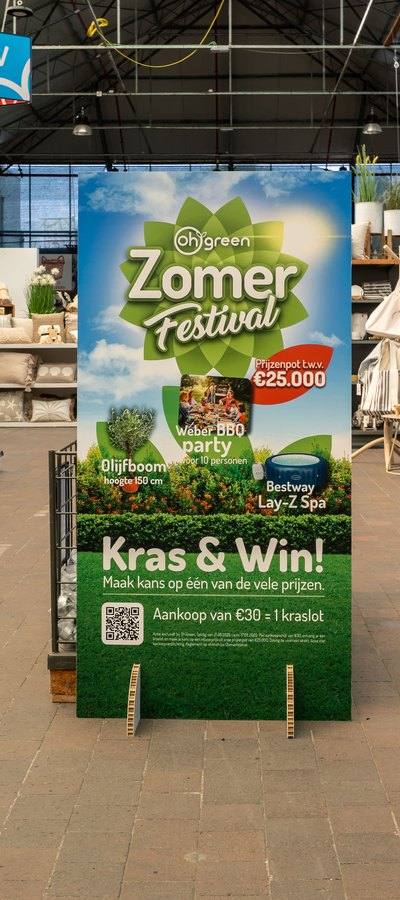
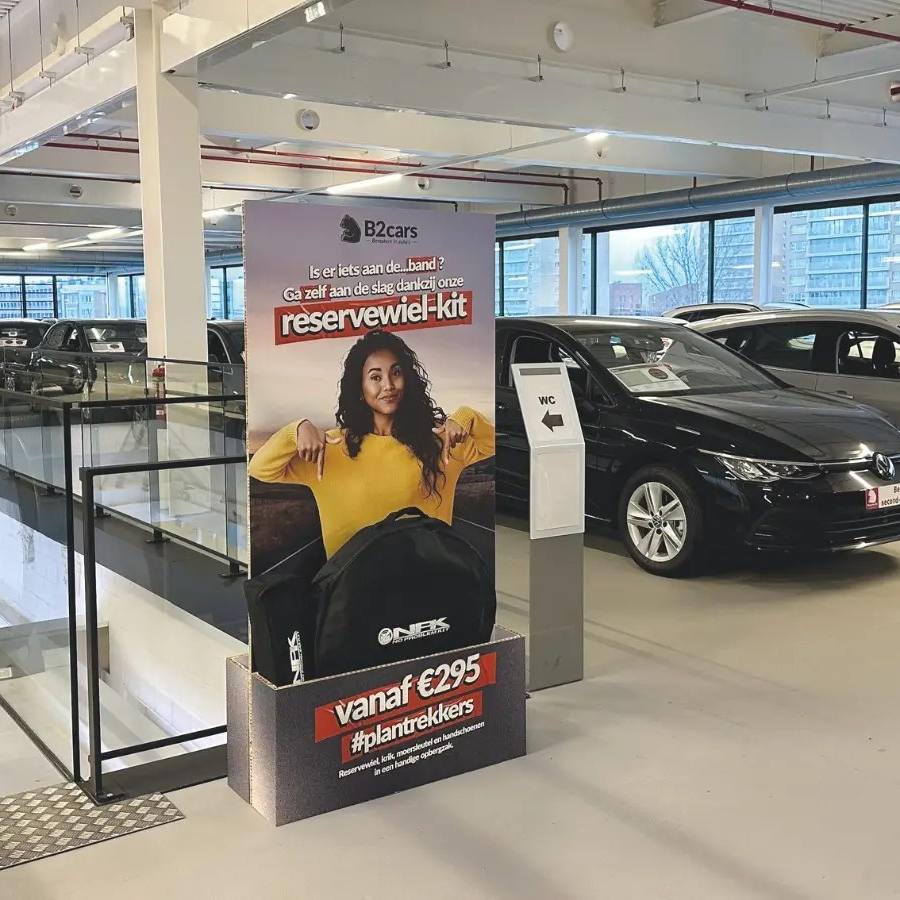
The decision is made in the shop, and at a trade fair you have three seconds. We supply the full POS and display range — from roll-up banner to illuminated totem — with an eye on what you need most often: switching the message quickly.
Prices are available in the Herva-Doublet Platform.
From first sketch to maintenance — one partner who coordinates the whole project.
You call one number. We measure, design, have it produced, install and maintain. No fragmented responsibility, no waiting on subcontractors pointing at each other.
A 3D visualisation of your own façade or space, by day and by night. Production only starts once that image is right. No surprises afterwards.
From façade to interior: 20 product families with one partner. No need to coordinate three suppliers.
ISO 9001 and ISO 14001. Colourfast, weather-resistant materials and energy-efficient LED lighting. With long-term service and maintenance.
POS material, short for point of sale, is everything that makes your product visible at the moment the customer decides. A large share of retail purchases is only settled in the shop. Whoever fails to stand out at that moment loses the sale to whoever does, however good the campaign beforehand.
We design, produce and distribute POS material for brands, distributors and retail chains. From a single counter display to a rollout of hundreds of units across every point of sale, including packing per shop and assembly instructions.
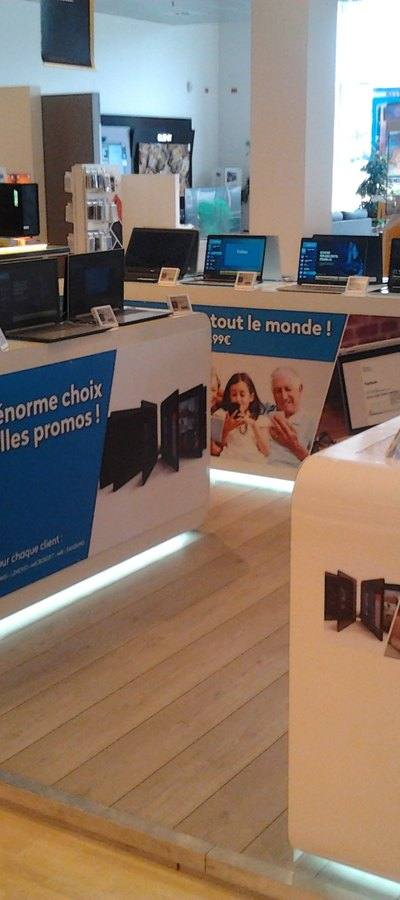
Compact displays at the till or on the counter, aimed at impulse purchases. They work best for small products with a low threshold. The limiting factor is almost always the available counter space; a display that gets in the cashier's way disappears under the counter within a week.
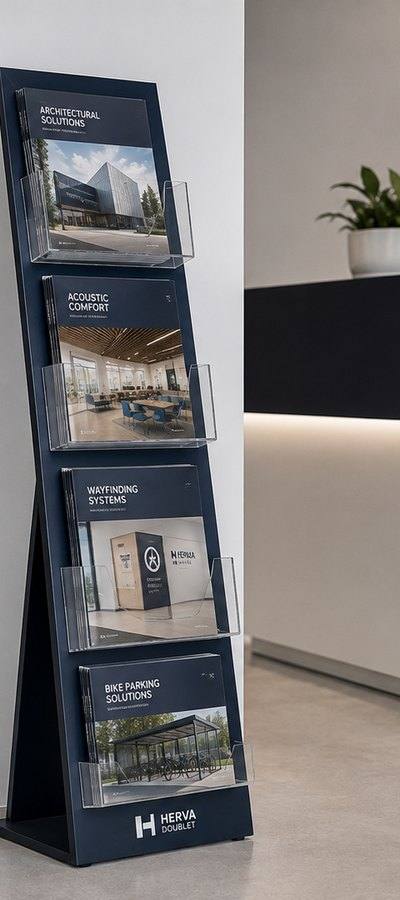
Freestanding displays that take their own place in the shop, in cardboard for temporary promotions or in metal and plastic for long-term use. Floor displays require an agreement with the retailer about their position: the end of an aisle delivers far more than a corner at the back.
Shelf strips, wobblers, stopper cards and price ticket holders. Small items, but exactly the items that work at the precise moment of choosing between two brands.
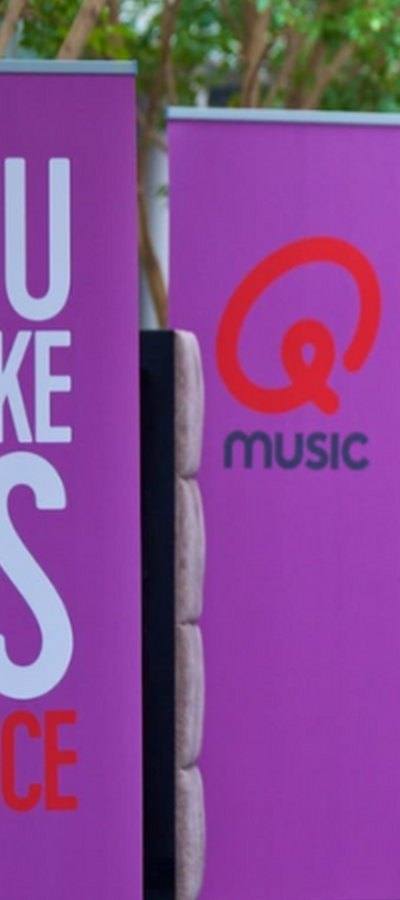
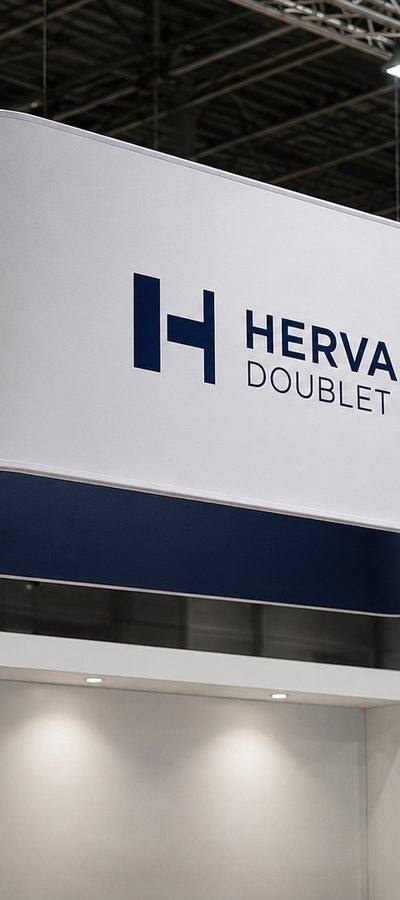
Quick to put up and take down, ideal for temporary promotions, trade fairs and seasonal changes. Textile frames with tensioned fabric give a crisper image than a conventional roll-up, and the fabric is replaceable without renewing the frame.
A defined brand zone within a larger store, with its own wall covering, furniture, lighting and signage. This is the heaviest form of POS, but also the one with the longest-lasting effect.
Screens with changing content, controlled remotely. Strong where the message changes often; unnecessary where the same message stays for months, because a printed panel is then cheaper and just as effective.
This choice determines both the cost and the environmental impact, and depends entirely on how long the display has to last.
Cardboard and corrugated board are the logical choice for promotions lasting a few weeks. They are light, cheap to ship, fully printable and recyclable. For a seasonal promotion or a product launch this is usually the most sensible material.
Metal, plastic and timber belong to permanent display. They cost more to buy, but if the display stays in the shop for two or three years, the cost per month falls well below that of repeatedly renewed cardboard. For these versions we like to work with interchangeable image panels: the unit stays, only the image changes per campaign. That substantially reduces the recurring cost and makes a considerable difference in waste.
A display that looks good on screen can fail completely in the shop. We test every design against a number of practical points:
For larger runs we make a physical prototype. That costs an extra week, but it prevents you having a thousand made that do not work in practice.
In a rollout the work lies not in production but in logistics. We can pack per point of sale, with the right quantities per store format, supplied with clear assembly instructions and, if you wish, shipped directly to each branch or to the chain's distribution centre. You get one point of contact instead of a hundred shipments to track.
For recurring campaigns we record the materials and specifications so that a subsequent round runs faster and identically. What is a project the first time becomes routine thereafter.
POS material is rarely evaluated, and that is a missed opportunity. Simple ways to learn something anyway: compare sales in branches with and without the display over the same period, use a unique QR code or promotion code per campaign, and ask shop staff briefly afterwards what was and was not in place. That information steers the next design far more sharply than a feeling after the fact.
POS material has no fixed unit price. What drives the cost:
Give us the run size you want, the intended lifespan and the format of the product to be presented, and you will receive a quotation in which these items appear separately. That way you immediately see where you can shift, for instance by increasing the run or simplifying the finish.
Prices are available in the Herva-Doublet Platform.
Send us your campaign material, the product and the number of points of sale. We will come back with a design proposal, a visualisation and a quotation per version, so you can weigh up temporary against permanent yourself.
You will find more background and practical tips in our articles.
20+ years in POS, displays, large-format print and adhesive graphics

20+ years in adhesive graphics, POS and interior fit-out
Direct contact runs through our team: 014 55 69 22 or info@herva.be.
We think along from the first sketch through to installation and maintenance.